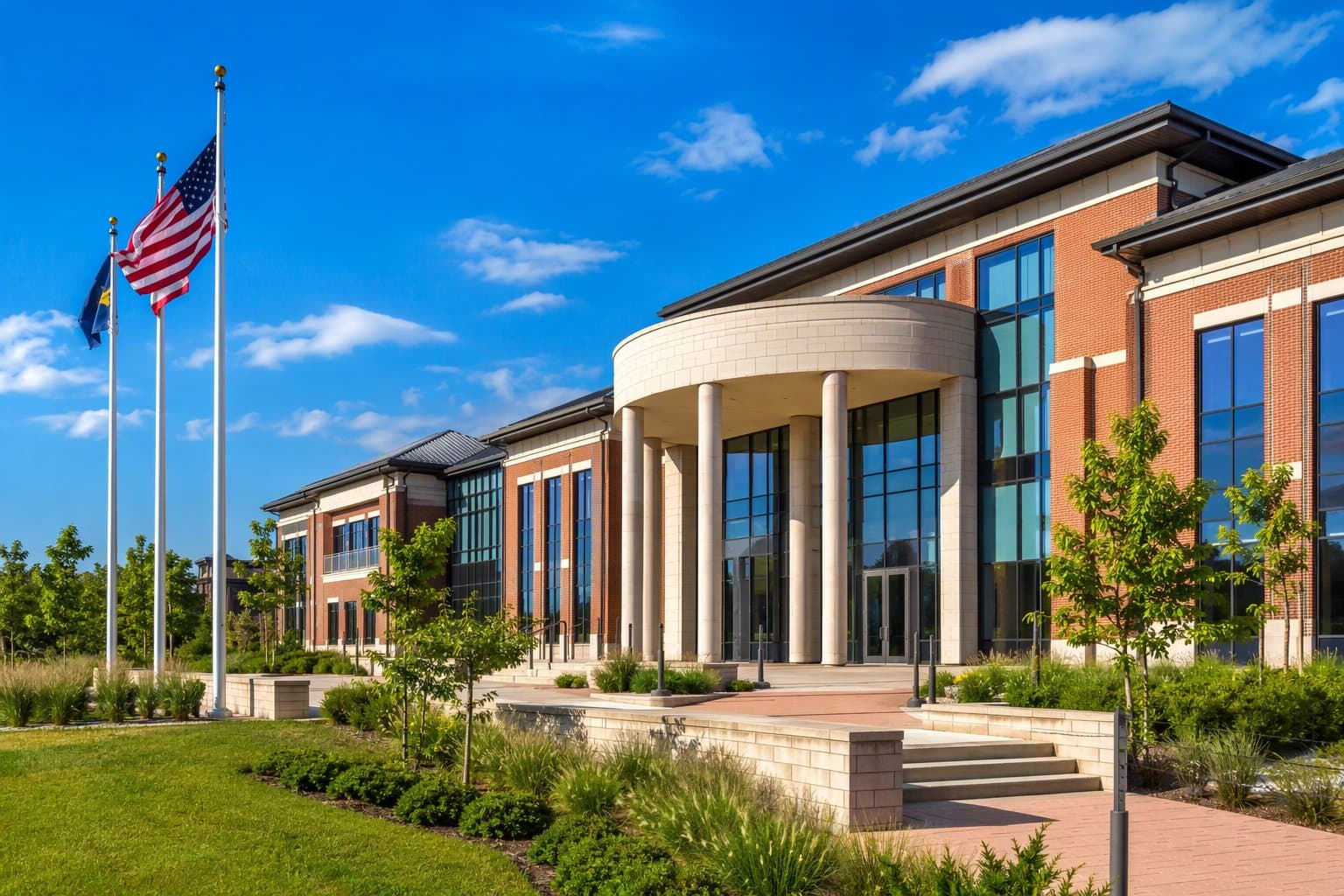
Texas A&M University held a grand opening Friday, Nov. 20, for its Space Institute, a research building that sits just beyond NASA's Johnson Space Center gates.
The Legislature put $200 million toward the project, according to the university. Its centerpiece is a pair of simulated landscapes, one modeled on the moon and one on Mars, each large enough to fit a football field.
A&M said the lunar ground is made of Uvalde-area quarry rock, picked after testing showed it was an accurate stand-in for the moon's surface, while the Martian terrain uses rock from New Mexico.
Who runs it
Former astronaut Nancy Currie-Gregg is the institute's director. Two former NASA engineers fill the other top jobs: Robert Ambrose as associate director and Bill Bluethmann as assistant director.
"The next era of exploration will be led by the engineers we're preparing today," Currie-Gregg said in the university's announcement.
Space for rent
The building has 10 research bays that academic, industry and government groups, NASA among them, can lease. The university said AstroLab and Intuitive Machines have signed leases and several other agreements are close to final.
Two of the bays are held for Texas universities at no charge. Faculty, research technicians and student groups at Texas schools can apply with a one-page proposal, which an executive committee of the Texas Aerospace Research and Space Economy Consortium will review.
Rather than fitting every lab with special gases and utilities up front, the designers ran a large central corridor that lets tenants route what they need as their work changes.
Ambrose said a concrete outdoor pad with power and network hookups, which he called a "technical RV park," will be built behind the institute so researchers can bring in their own setups, such as a mobile clean room.
Researchers will also be able to rent spacesuits for experiments, which the university said makes tests of instruments, rovers and other hardware on the simulated terrain more realistic. Ambrose said the site will support development of instruments, robots, landers and deployment systems for space, including A&M's ongoing Roboball project.
A&M System Chancellor Glenn Hegar said the building puts Texas "at the forefront of the rapidly growing space economy." University President Susan Ballabina said students will work alongside researchers, NASA partners and industry.
Sources
stories.tamu.edu